
Gran Paradiso · Neighbor Guide
History of Venice
Just west of Gran Paradiso and Wellen Park, historic downtown Venice sits on its own island between the Gulf of Mexico and the Intracoastal Waterway—about an eight-and-a-half-mile drive from our main gate. Palm-lined Venice Avenue, Mediterranean Revival storefronts, and a carefully planned street grid are not accidents of growth. They are the living inheritance of a Gulf Coast town that was imagined, nearly lost, and remade across more than a century. For neighbors who shop Venice MainStreet, walk the beach for shark’s teeth, or ride the Legacy Trail from the Historic Venice Train Depot, knowing that story deepens the pleasure of living here.
Where Venice Began
Long before surveyors drew lines on Florida maps, Indigenous peoples occupied this coast for more than 12,000 years, fishing the bays and making a life among the mangroves and shell ridges. In the 1880s the early settlement was known as Horse and Chaise, named for a local landmark—trees whose silhouette reminded sailors of a horse and carriage. Late in the nineteenth century, settler Frank Higel arrived and successfully suggested renaming the area Venice in 1888, because the web of waterways reminded him of Italy’s canal city. The name stuck, even as the first Venice post office stood in what is today Nokomis. For decades the place remained an isolated fishing and farming hamlet—until the Seaboard Air Line Railroad reached the area in 1911 and opened the Gulf shore to outside development. Wealthy Chicago businesswoman Bertha Honoré Palmer and orthopedic surgeon Dr. Fred H. Albee would soon leave their mark through large land purchases that set the stage for a planned city on the Gulf.
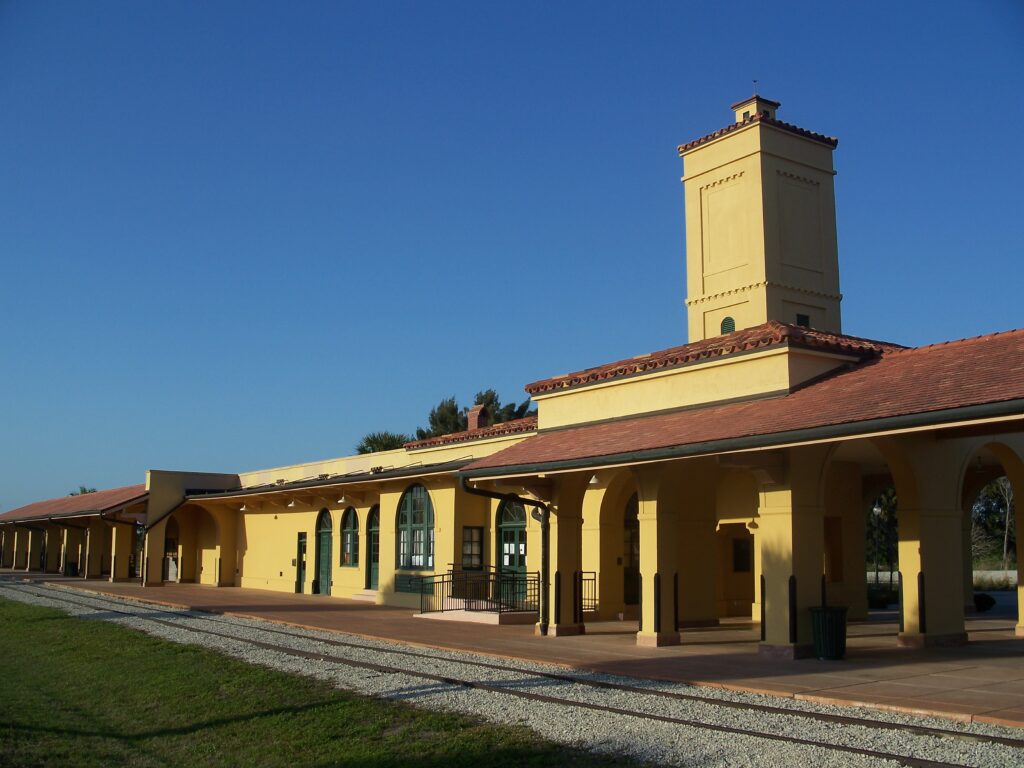
A Railroad Union’s Dream on the Gulf
The Florida land boom of the 1920s brought a bold new vision. Dr. Albee purchased thousands of acres and hired renowned urban planner John Nolen to lay out a community. Before that plan could fully take shape, the Brotherhood of Locomotive Engineers—then among the nation’s largest railroad labor unions—bought the property in 1925 and retained Nolen to design a grand retirement haven of wide boulevards, parks, and northern Italian and Mediterranean Revival architecture. Venice was incorporated as a town in 1926 and redesignated as a city by the Florida Legislature in 1927, the same year the Historic Venice Train Depot was completed. Then the boom collapsed. The end of the Florida land rush and the onset of the Great Depression strained the young city and brought local projects to a near halt—leaving unfinished dreams beside the finished bones of a remarkable plan.
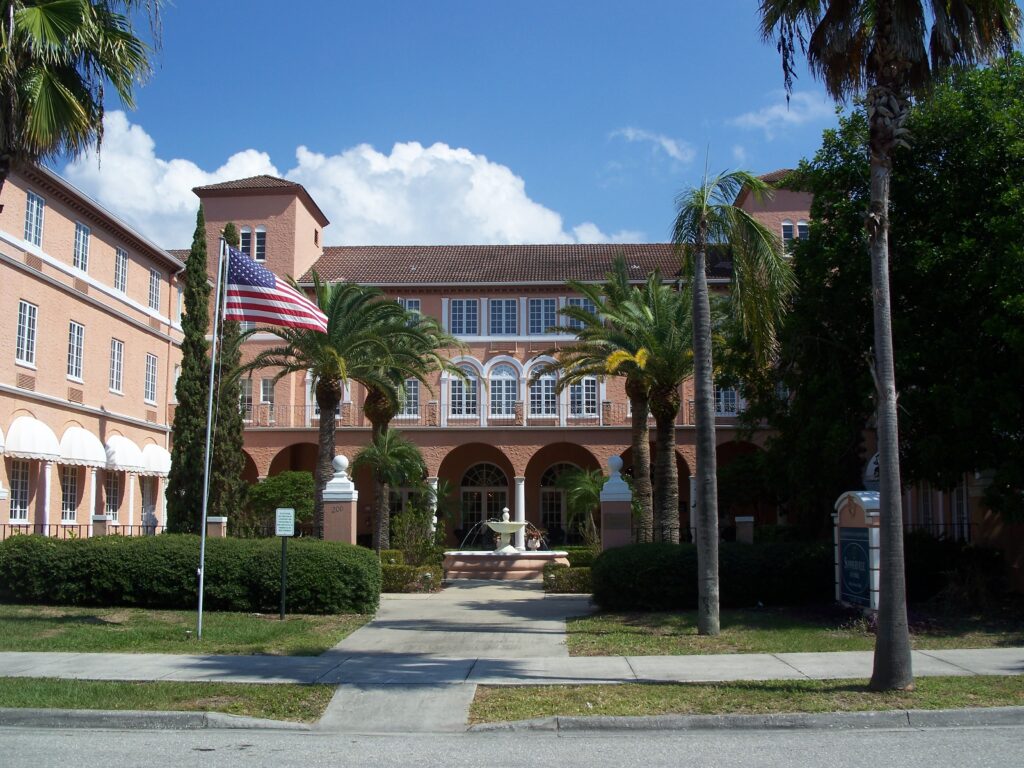
The Plan That Still Shapes the Streets
Nolen’s first commission here came in 1925 from Dr. Albee; after the sale to the BLE, the planner returned to refine a city for the Gulf itself. Influenced by the Garden City Movement, his design called for a walkable, mixed-use urban core, generous green parks, and broad boulevards leading toward the water, all guided by Mediterranean Revival architectural standards. The New York firm Walker and Gillette served as supervising architects, and Prentiss French shaped the landscape—trees, parks, and the green framework that still softens Venice’s streets. A century later, Venice honored that legacy by unveiling a bronze statue of Nolen seated on a bench with his city plan, in Centennial Park at West Venice Avenue and North Nokomis Avenue. Sit beside him and you are looking at the map that still explains why downtown feels so deliberate.
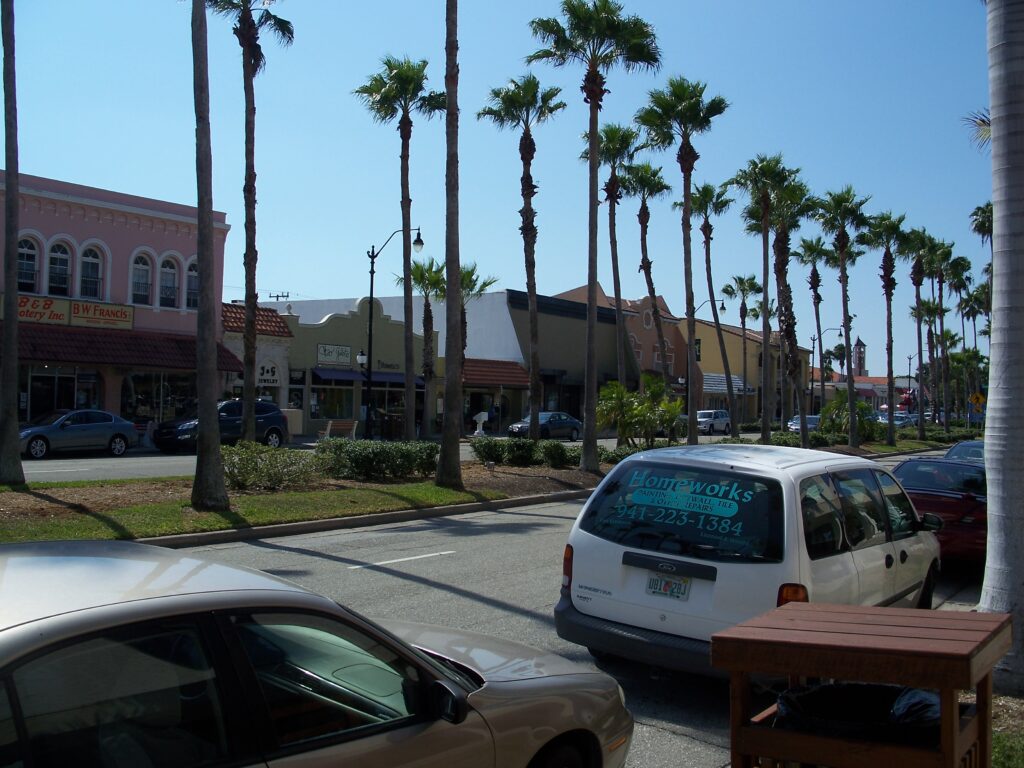
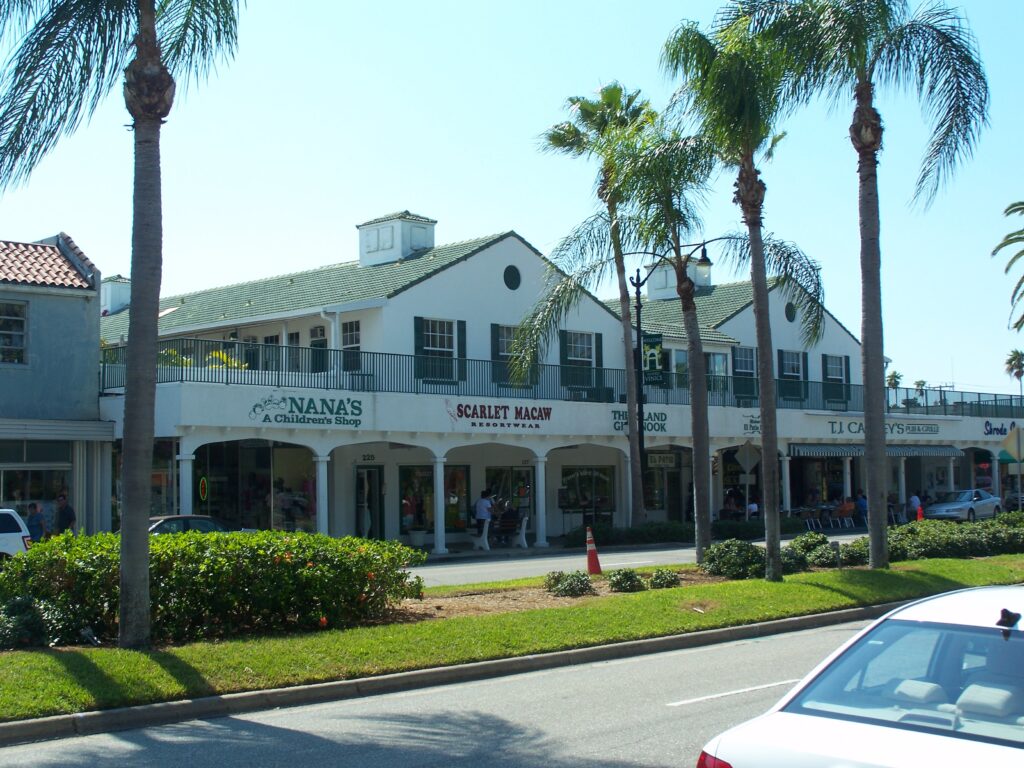
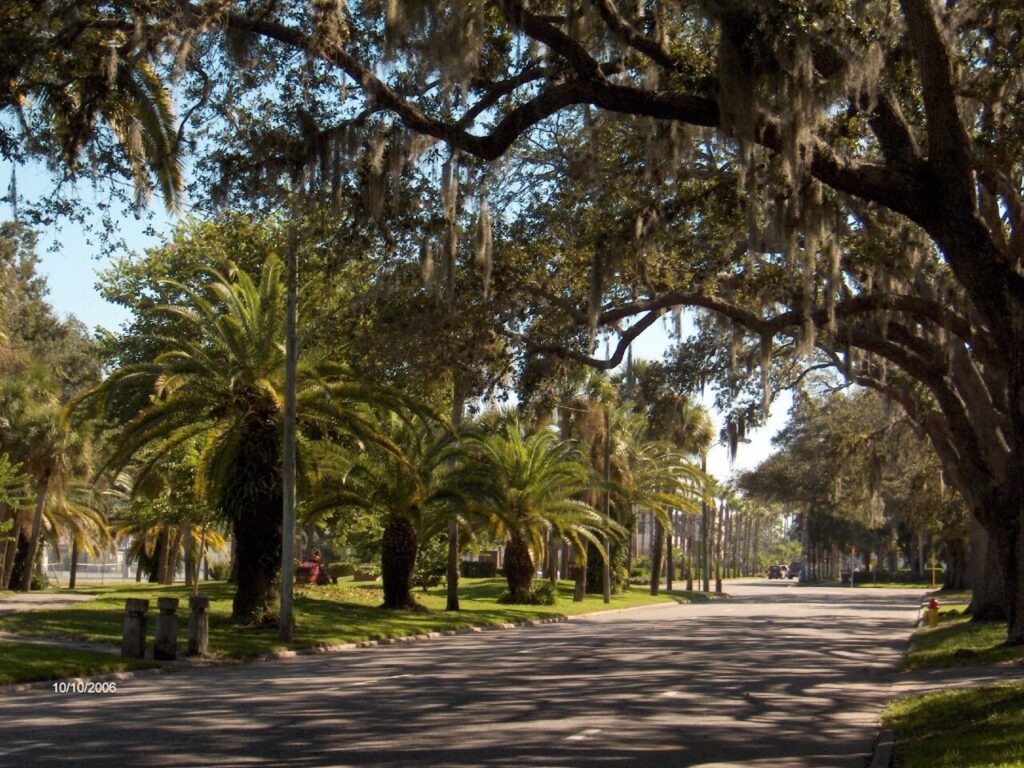
Cadets, Pilots, Clowns, and an Island
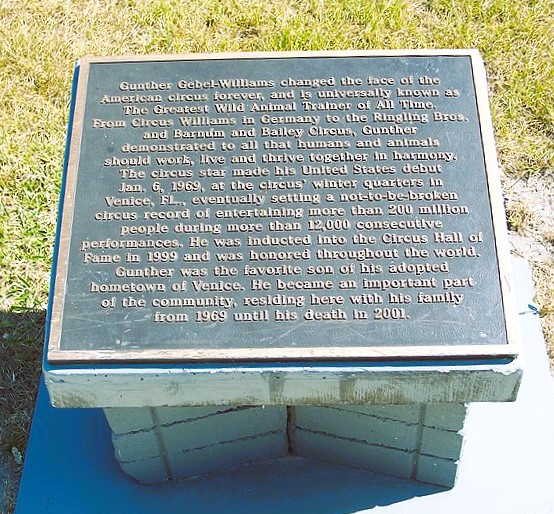
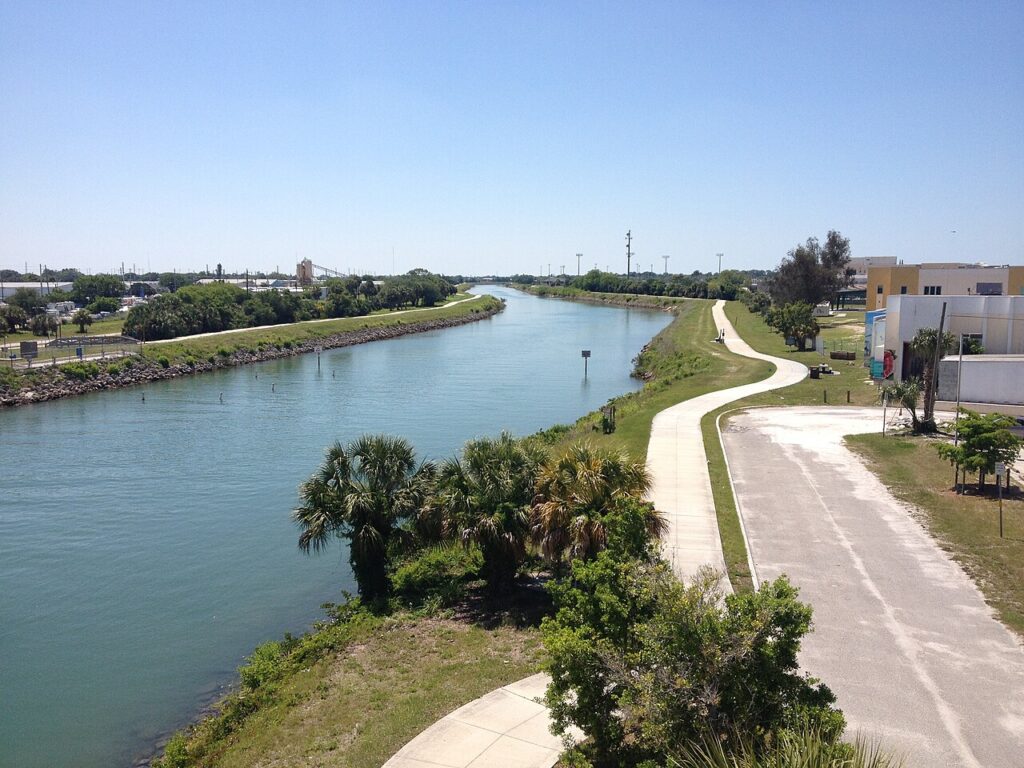
Venice’s mid-century chapters are stories of resilience. Beginning in 1933, the Kentucky Military Institute used Venice as its winter campus for decades, bringing cadets and a measure of stability to a quiet local economy. In 1942 the military established the Venice Army Air Base to train fighter pilots; after the war the airfield returned to municipal and civilian aviation, and veterans coming home on the G.I. Bill helped spark a new wave of growth. From 1960 to 1991, Venice served as the official winter quarters of the Ringling Bros. and Barnum & Bailey Circus, leaving a colorful imprint that included the famous Clown College. And in the 1960s, dredging of the Intracoastal Waterway physically isolated downtown Venice into the island residents know today—bridges and blue water framing the same Mediterranean streets Nolen once drew on paper.
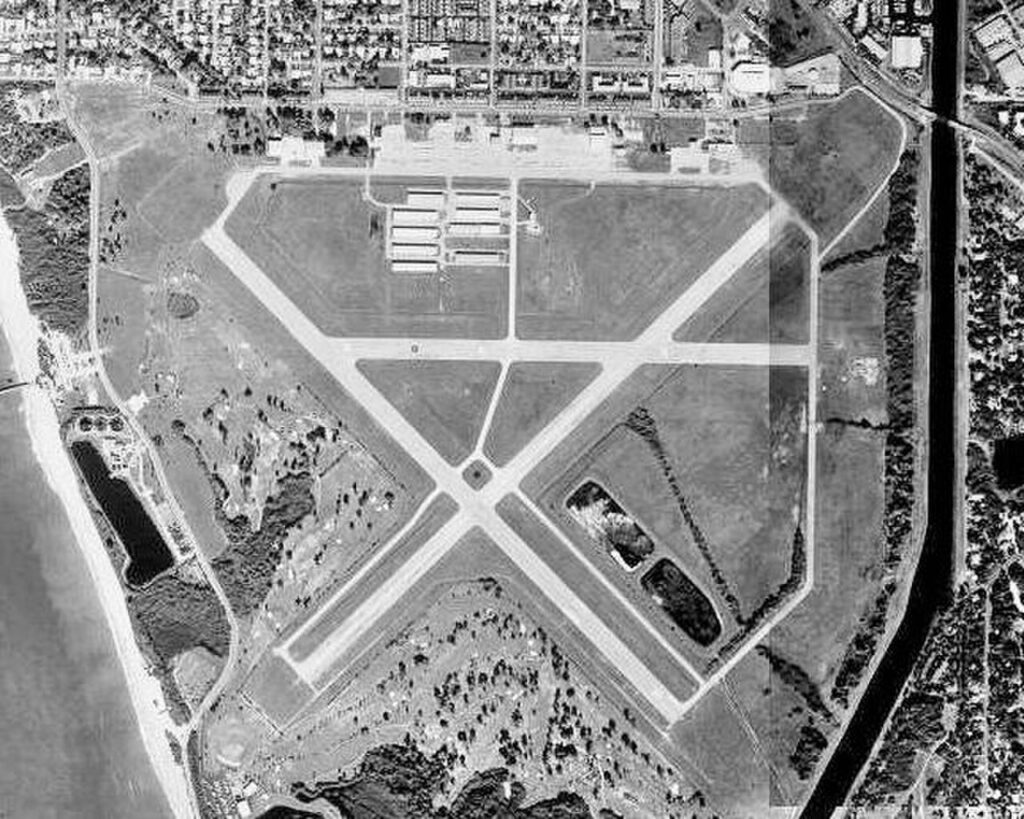
United States Geological Survey (USGS) / The National Map via Wikimedia Commons (public domain)
Explore More
For photographs, archives, and deeper research, visit the City of Venice historical resources and the Venice Museum & Archives:
Venice Museum & Archives / City historical resources
Thinking Venice or Naples? Read Eric’s honest comparison.
Eric Johnston